SEDISA 2026: From strategic consensus to the challenge of execution
by Persei vivarium, April 20, 2026
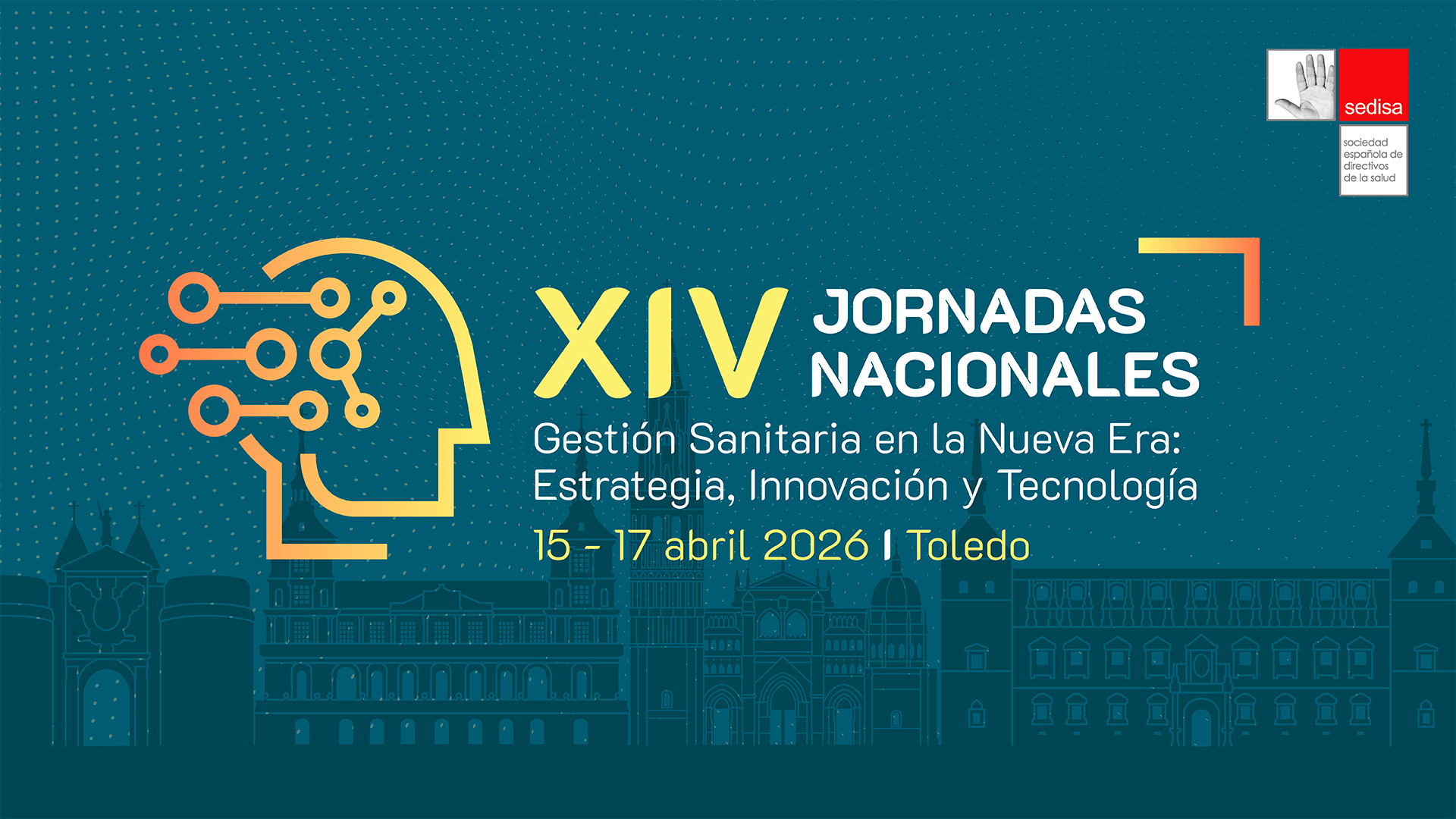
The 14th National SEDISA Conference, held in Toledo under the theme “Gestión Sanitaria en la Nueva Era: Estrategia, Innovación y Tecnología”, brought together leading executives and managers from the Spanish healthcare system to discuss the major challenges in the sector’s transformation. Beyond the usual themes addressed in these forums, the event highlighted a key shift: the debate around the need for healthcare digitalization is now behind us. What currently drives the conversation is how to implement it with rigor, at scale, and with measurable outcomes.
The most consistent message throughout the three-day event was the centrality of data as the foundation for transformation. Not from a perspective of accumulation, but from its ability to become a decision-making criterion, a lever for process improvement, and a tool to measure outcomes. Data governance, true interoperability, and the effective use of clinical and operational information are now among the system’s structural priorities. In this context, having data is not enough: what truly matters is having the frameworks, capabilities, and tools to translate it into actionable insights.
Alongside this, the event clearly reinforced another structural shift: the transition from predominantly episodic care to more continuous, proactive, and integrated models. The need to extend care beyond traditional settings —with a particular focus on home-based care and primary care—, to connect different levels of care, and to reduce friction between systems and professionals was a central topic. Remote monitoring of chronic patients, hospital-at-home models, and structured post-discharge continuity are no longer presented as pilot projects, but as active operational levers with measurable outcomes and a clear intent to scale. This approach responds both to improving patient experience and outcomes, and to the growing demand for efficiency and sustainability within the healthcare system.
In the same direction, prevention has gained significant prominence. The focus is on structured and longitudinal programs —personalized health pathways, dynamic risk stratification models, and monitoring of indicators before they become costly clinical events— supported by both clinical and economic arguments: acting before problems arise is not only more efficient; in a context of accelerated population aging and increasing pressure on healthcare expenditure, it is the only viable way to sustain universal coverage.
The approach to artificial intelligence was notably pragmatic. The dominant perspective was not centered on technological novelty, but on real-world utility within specific clinical and organizational processes. The sector’s interest is focused on applications capable of improving operational management —such as schedule optimization, proactive demand management, structured clinical escalation, and decision support— within clear governance frameworks and appropriate oversight. The conversation has matured: it is no longer about the abstract potential of technology, but about its effective integration into everyday clinical practice.
A particularly relevant cross-cutting theme was the shared criticism of overly fragmented innovation, often dependent on pilot initiatives with no clear path to scale. What the system demands today is not new isolated solutions, but approaches that can be robustly implemented, integrated into daily operations, and sustain results over time. Healthcare transformation increasingly requires continuity, coordination, and real implementation capabilities —not just technology.
Ultimately, SEDISA 2026 reflects a sector that has a clear strategic direction and is now demanding practical tools to move forward. The priority is no longer to define transformation, but to make it happen. And this requires combining vision, governance, organizational redesign, technological capabilities, and a strong focus on outcomes. The new era of healthcare management will not be defined by the adoption of more tools, but by the ability to translate strategy, innovation, and technology into real, measurable, and sustainable impact.
Share



Persei vivarium
by Zelenza Group