
Ultra-Early Diagnosis in Oncology: Bringing Artificial Intelligence into Clinical Practice
by Persei vivarium, Sept 23, 2026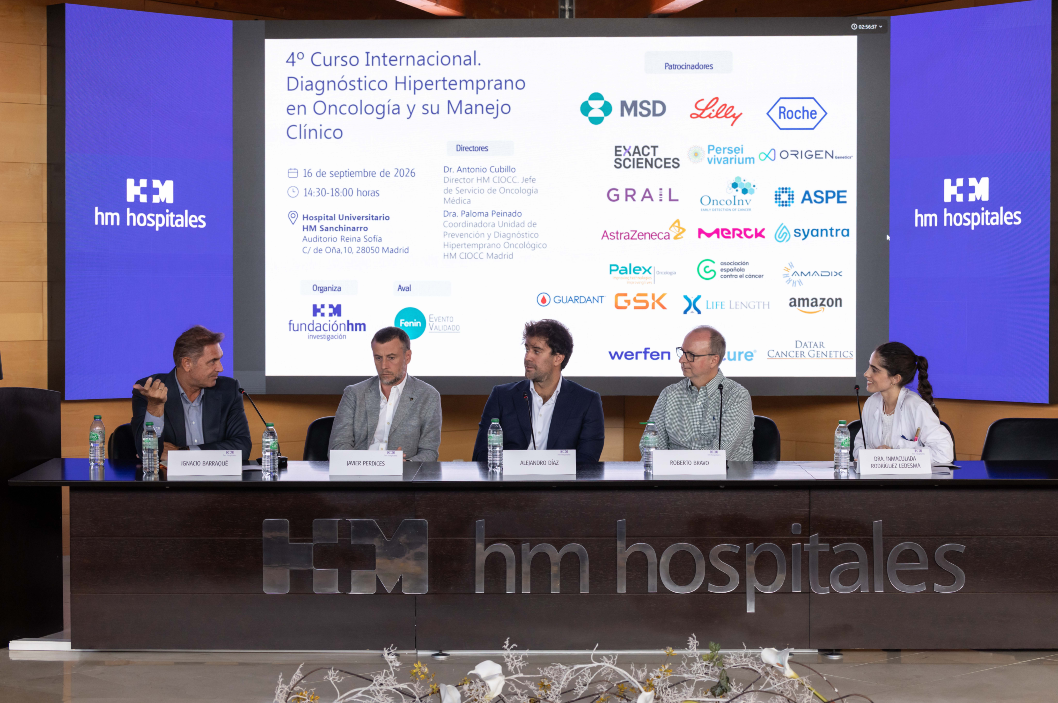
The 4th International Course “Ultra-Early Diagnosis in Oncology and its Clinical Management: Towards a New Era in Cancer Detection and Treatment”, held at HM Sanchinarro University Hospital, brought together healthcare professionals, industry representatives, technology companies, associations and diagnostic experts to explore how to move towards models capable of identifying cancer at increasingly earlier stages.
Artificial intelligence played a particularly prominent role throughout the event due to its potential to identify at-risk populations, detect relevant patterns and support ultra-early diagnosis, as well as the challenges that still remain when integrating these technologies into clinical practice.
Roberto Bravo, CEO and Founder of Persei vivarium by Zelenza group, took part in the roundtable “Drivers and Barriers to the Introduction of AI Algorithms into Routine Clinical Practice”, as part of the session dedicated to identifying target populations for ultra-early diagnosis using AI algorithms. He was joined by Alejandro Díaz, Digital Health Expert at Roche Farma; Javier Perdices, Healthcare Senior Account Executive at Amazon Web Services; and Ignacio Barraqué, Chief Marketing Officer at Origen Corporación Biotech. The session was moderated by Dr Inmaculada Rodríguez Ledesma.
The discussion highlighted that there is already significant awareness of the potential of artificial intelligence. In fact, these technologies are already being used across different areas of clinical practice, from diagnostic support tools to solutions capable of capturing and transforming conversations into structured information that can be incorporated into electronic health records.
When it comes to ultra-early diagnosis, however, the challenge goes beyond technology or artificial intelligence itself. Identifying people at higher risk triggers a care pathway that must be prepared to manage the resulting patient flow: what happens next, which tests are performed, who orders them, who is responsible for follow-up and whether the healthcare system has sufficient capacity. The potential benefit is highly significant, as earlier identification can lead to prevention, earlier diagnosis and more personalised decision-making.
The roundtable also addressed several factors needed to advance adoption, including access to sufficient, reliable and representative data, the ability to scale projects and the need to demonstrate cost-effectiveness. In addition, a regulatory framework is essential to ensure the safety and reliability of these technologies, although it can also make implementation processes more complex.
In this context, and with the aim of facilitating the adoption of innovative solutions, Roberto Bravo emphasised the importance of not turning technology integration into an objective in itself. Not every project requires the same level of integration from the outset. Technology and its architecture should be adapted to the clinical problem being addressed, avoiding unnecessary complexity when it does not provide a proportional benefit.
In ultra-early diagnosis, AI expands our ability to identify risks and anticipate clinical decisions, enabling more personalised prevention and follow-up models. To generate meaningful impact, these solutions must address a specific need and be integrated into the care pathway in a way that provides real value.
At Persei vivarium, this is precisely the approach we take: technology should serve the care process, facilitating data capture and analysis, patient monitoring and the generation of evidence to measure outcomes and translate innovation into clinical practice.
Share



Persei vivarium
by Zelenza Group