
The AI Revolution in Healthcare in 2026
by Ana Díaz-Roncero, August 05, 2026
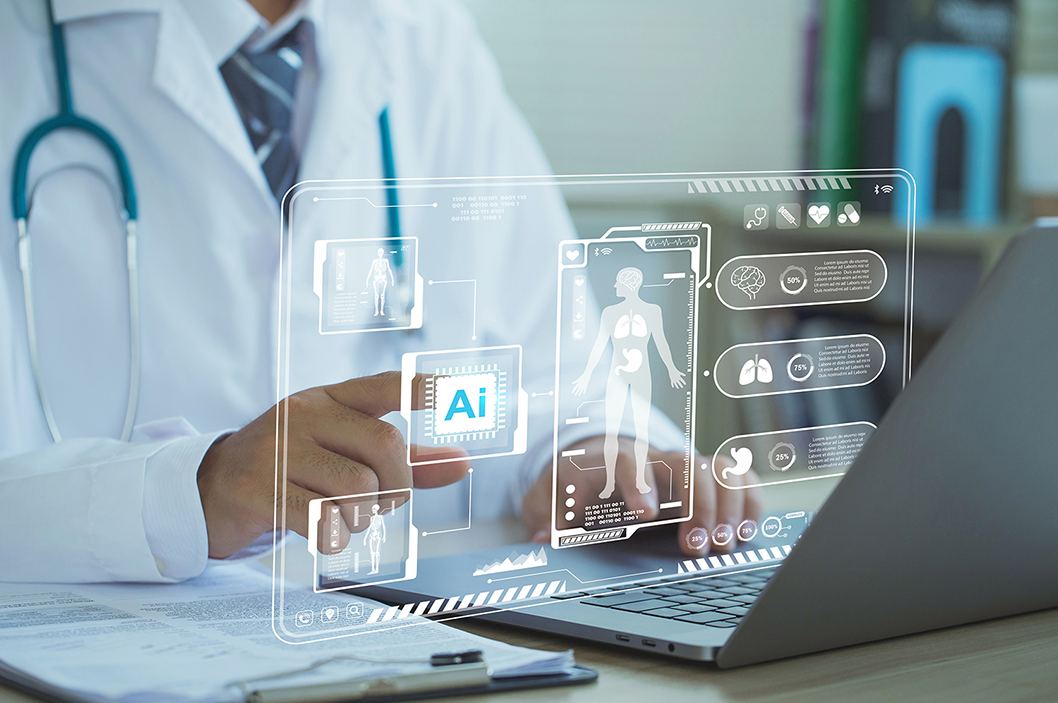
Artificial Intelligence (AI) is transforming every industry, and healthcare is no exception. In 2024, we discussed the role of AI in healthcare and the potential this technology offers in research, prevention, diagnosis, and treatment. By 2026, its value and possibilities are undeniable, but the focus of the conversation has shifted.
Today, there are numerous use cases, ranging from diagnosis to healthcare management, as highlighted by WHO Europe. This reflects how AI in healthcare has moved from the experimental stage to implementation. The challenge now is to deploy it safely, validate it, integrate it into clinical practice, and generate real value.
Research, Prevention, and Diagnosis
AI continues to strengthen its role in research by accelerating knowledge generation and the development of new medicines. In 2026, agencies such as the EMA and the FDA established common principles for its use throughout the medicinal product lifecycle, including research. This shows that AI is evolving from an isolated tool into an accepted and integrated component of regulatory processes.
Meanwhile, the use of AI to support diagnosis, particularly in medical imaging, is one of its most established applications in healthcare, as noted by Spain’s Ministry of Health.
Treatment and Disease Management
One of the most significant developments has been the use of AI to improve healthcare efficiency through generative AI tools for clinical documentation, automated transcription, and administrative support. These solutions contribute to the sustainability of healthcare systems and the quality of care.
Beyond administrative applications, AI enables risk stratification, treatment personalization, and remote patient monitoring, helping to anticipate potential complications. These are areas already identified as priorities in Spain’s national strategies.
In this context, Digital Health solutions such as Digital Therapeutics (DTx) are particularly relevant, as they make it possible to collect and analyze data and generate recommendations that improve patient follow-up, treatment adherence, and quality of life.
A New Regulatory Framework in Europe
Another key development is the entry into force of the Artificial Intelligence Act and the European Health Data Space (EHDS), marking a turning point in the development and implementation of these technologies.
Under this regulation, most AI solutions used in healthcare will be required to meet strict standards for risk management, data quality, transparency, human oversight, and robustness. Their success will therefore depend on their ability to generate evidence and ensure regulatory compliance.
Looking Ahead
Artificial Intelligence has enormous potential in healthcare, but its evolution over the past two years has changed the focus: demonstrating that it can be used is no longer enough; it must now be successfully implemented in real-world practice.
At Persei vivarium, we develop digital solutions tailored to the needs of each condition. These solutions integrate tools such as AI and transform data into clinical evidence, supporting their effective performance and adoption in clinical practice.
In this new landscape, collaboration between healthcare professionals and Digital Health companies will be essential to achieve the effective adoption of AI in healthcare and move towards a more efficient, personalized, and patient-centered model of care.
Share



Ana Díaz-Roncero
Business Development
Persei vivarium